
In recent weeks, renewed attention has been drawn to Prince Harry and Meghan Markle, with growing speculation about whether the couple could still play a meaningful role in supporting the British monarchy during a challenging period. The question, once considered unlikely, has resurfaced following reports that the Sussexes believe they could help repair the institution’s image—particularly in the aftermath of controversies linked to Prince Andrew.
:max_bytes(150000):strip_icc():focal(729x282:731x284)/meghan-markle-031026-22b5ddced29c457880812ec13926c227.jpg)
This idea has been fueled by the couple’s recent public appearances, which have closely resembled the kind of royal tours they once carried out as working members of the family. Their visit to Jordan, organized in collaboration with humanitarian organizations, showcased a familiar dynamic: Harry engaging directly with individuals affected by hardship, and Meghan presenting a composed, confident presence that blended advocacy with a touch of celebrity influence. For many observers, it was a reminder of how effective they once were in official roles.
One royal commentator noted, “Whatever you think of their choices, they were undeniably good at this part of the job. They connected with people in a way that felt natural.” This ability to engage with the public—particularly in emotionally charged settings—has long been seen as one of Harry’s strengths. His background, combined with his personal experiences, allows him to communicate empathy in a way that resonates across different audiences.
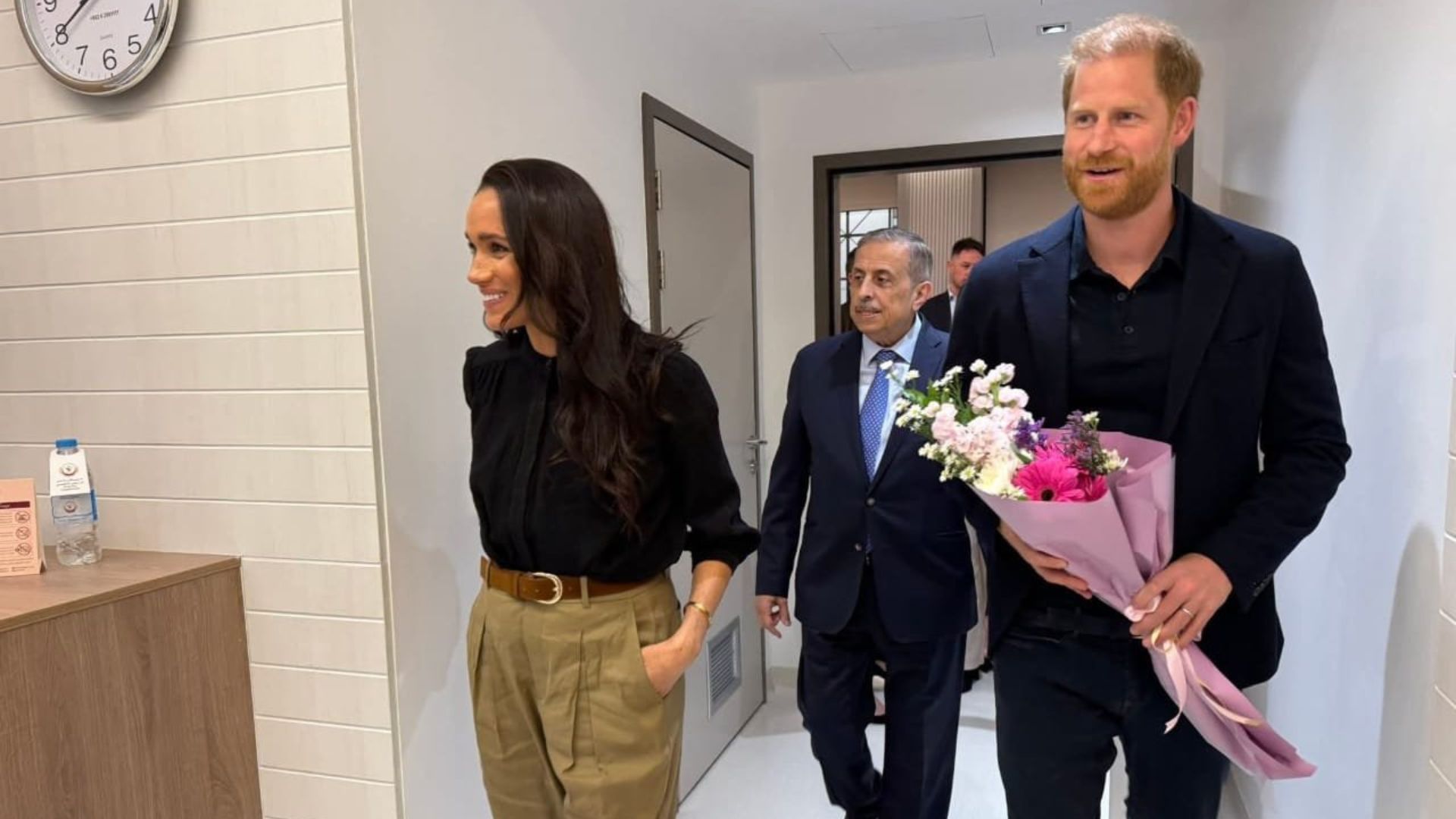
At the same time, Meghan’s presence adds a different dimension. Her understanding of media, branding, and storytelling has enabled the couple to amplify their impact beyond traditional royal engagements. While critics sometimes view this as overly calculated, supporters argue that it reflects a modern approach to public service. “They bring attention where it’s needed,” one observer commented. “And in today’s world, that matters.”

The timing of these activities has also raised questions. With several senior members of the royal family reducing their public duties due to health concerns, there is a noticeable gap in visibility. King Charles and the Princess of Wales have both faced health challenges, limiting their ability to travel and engage as frequently as before. In this context, the Sussexes’ continued international presence—through visits to countries such as Colombia, Nigeria, and now Jordan—stands out even more.
Some experts believe that this contrast highlights what the monarchy might be missing. “There’s a shortage of active figures who can carry out high-profile engagements globally,” one analyst explained. “Harry, in particular, could fill that role if circumstances were different.” This perspective has led to renewed discussions about whether a partial return—or at least closer cooperation—might benefit both sides.
However, the situation is far from straightforward. Harry and Meghan’s departure from royal duties was marked by deep disagreements, followed by public revelations that further strained relationships within the family. Interviews, documentaries, and memoirs have all contributed to a level of mistrust that cannot easily be undone. For many within the royal institution, the idea of reintegration raises concerns about stability and control.
Public opinion reflects this complexity. Some people see the Sussexes as valuable assets who could help modernize the monarchy and reconnect it with younger audiences. Others remain skeptical, questioning whether their motivations align with the institution’s long-term interests. “They left for a reason,” one reader remarked. “You can’t just pick and choose when to come back.”
There is also the question of Meghan’s own intentions. Reports suggest that she is focused on building her independent brand and may have little interest in returning to royal life, even in a limited capacity. This creates an imbalance in the discussion, as any potential role for Harry would likely depend on both partners being aligned in their goals.
Still, the broader issue remains: can the monarchy benefit from individuals who operate outside its traditional structure? The Sussexes represent a hybrid model—part royal, part global public figures—capable of reaching audiences that the institution itself sometimes struggles to engage. Whether this is an advantage or a complication depends largely on perspective.
One commentator captured this tension succinctly: “They might be exactly what the monarchy needs—or exactly what it can’t afford.” This duality lies at the heart of the debate. On one hand, their skills and visibility are undeniable. On the other, their independence challenges the very framework that defines the royal family.
Ultimately, the question is less about whether Harry and Meghan can “save” the monarchy, and more about what kind of monarchy the future demands. As public expectations evolve, so too must the institution’s approach to communication, representation, and relevance. The Sussexes, whether inside or outside the system, continue to play a role in shaping that conversation.
For now, their actions speak louder than speculation. Through their ongoing engagements and public initiatives, they are demonstrating a version of royal-style influence that exists beyond palace walls. Whether that influence will ever be reintegrated into the monarchy—or remain separate—remains one of the most compelling questions facing the royal family today.


