
It wasn’t filmed for television. There were no bright lights, no applause, no carefully edited story arc.
There was only silence.
And the sound of 170 dogs breathing behind rusted wire.
When Pete Wicks stepped through the gates of a South Korean dog-meat farm, he didn’t enter a set. He entered a place the world prefers not to see — a forgotten corner of cruelty where fear hangs heavier than the air itself, and survival is measured in days, not dreams.
By the time he left, 170 souls were no longer waiting to die.
The Place Where Hope Goes To Disappear
The cages were stacked in rows. Bare metal floors cut into paws. Fur was matted with filth. Eyes stared out with no expectation of kindness — because for many of these dogs, kindness had never existed.
Some had been born there, never knowing grass beneath their feet. Others were believed to be former pets — abandoned, stolen, or sold into a system that views animals as inventory rather than lives.
Pete has since described the moment as one that changed him forever.
“There’s a look,” one volunteer said. “It’s the look of a dog who has learned not to expect anything.”
The Rescue That Turned The Clock Back On Death

Working alongside international animal welfare organisations, Pete joined a mission that was as logistically complex as it was emotionally devastating.
Each dog was lifted gently from wire cages — some shaking uncontrollably, others too weak to resist. Volunteers wrapped them in blankets, whispered to them, held them against chests they had never felt before.
One by one, 170 carriers were filled.
And one by one, death lost its grip.
These dogs were not simply relocated. They were given something the farm had stripped away: dignity.
The Long Road To A New Life
From the farm, the animals began a journey few of them could have imagined — flying across continents to the UK, the United States and Canada, where rehabilitation teams and foster families are now preparing them for adoption.
For the first time, they felt open air. For the first time, their world was bigger than a cage.
Pete helped load carriers, calmed trembling bodies, stayed longer than he needed to. Not as a celebrity — but as a human being who refused to look away.
A Message Louder Than Fame
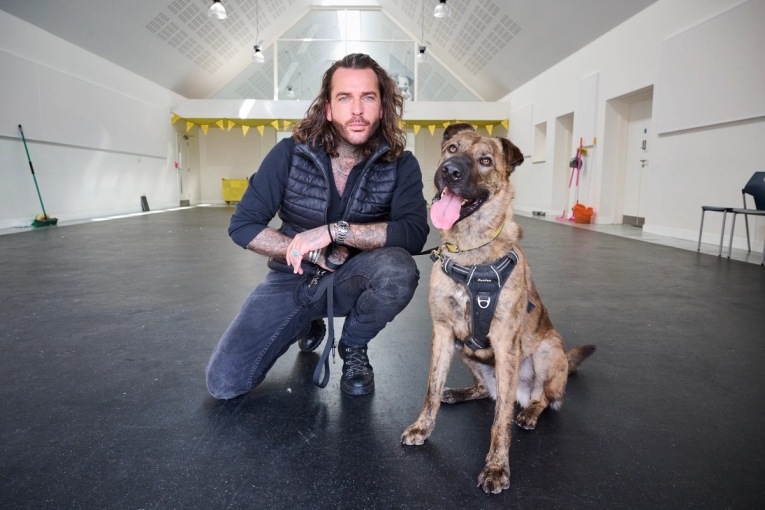
After the rescue, Pete spoke not of himself, but of responsibility.
Of using a platform not for applause — but for protection.
“This wasn’t about me,” he said quietly. “It was about them.”
In a world where cruelty survives in silence, this rescue became a moment that could not be ignored.
A Victory — And A Warning
For 170 dogs, this is the beginning of everything they were denied: safety, affection, a name, a home.
But for the thousands still trapped behind similar gates, this story is not a conclusion.
It is a call.
Pete Wicks didn’t save them alone.
But he stood when others turned away.
He used his voice when they had none.
And in a place built for endings, he helped write 170 beginnings.


